Fundamentals · Chapter 10 of 12
Choosing a cable machine for home
A cable system can add a lot to a home gym. Make sure the space, resistance and setup suit the exercises you want to do.
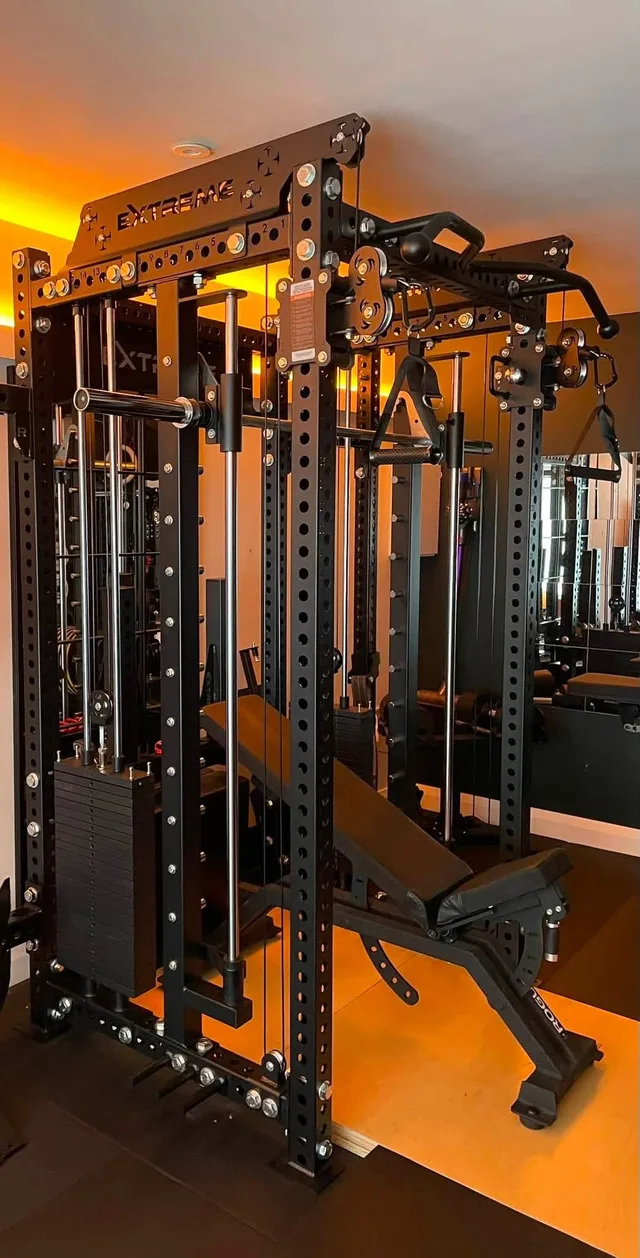
In the rack, or a machine of its own?
My gym has gone from an Extreme Fitness and Rogue hybrid to a REP Ares 2.0 setup. The later change let me fit the equipment into a smaller footprint and keep more open floor space. Combining jobs can be useful, but the room still has to work around it.
Draw both a rack-mounted and separate-machine option before deciding. A rack attachment can affect bench position, plate storage and other accessories. It also needs documented support for your exact rack series, height, depth and post layout. Matching a bracket’s hole size isn’t enough for a whole cable system.
The stack weight isn’t always what you pull
Pulley ratios are worth understanding before comparing weight stacks. In an ideal 2:1 system, selecting 40kg gives about 20kg of resistance at one handle. Friction and moving parts affect the feel. REP describes this half-weight relationship for the Ares.
Find the ratio for the output you’ll actually use. Different stations, or combining cables, can change the arrangement. Compare the smallest useful increment, maximum resistance and cable travel as well as the number printed on the stack.
Picture the exercises you’ll do
Look at the highest and lowest pulley positions, the distance between them and how far the cable extends. Then put yourself, your bench and any footplate into the layout. A machine can fit neatly into a corner without leaving enough space for your intended movement.
Plate-loaded and selectorised machines differ in convenience as well as price. Find out which handles are included, how it’s anchored and how you inspect and replace the cables. Those details are less fun than watching the demonstration video, but they matter once it’s yours.
Sources & further reading
Source pages checked 24 October 2026.
Something missing? Send a suggestion or correction.