Fundamentals · Chapter 11 of 12
Give your gym kit somewhere to live
Good storage makes the room easier to train in. Start with the heavy, awkward pieces, then find a home for the small stuff.
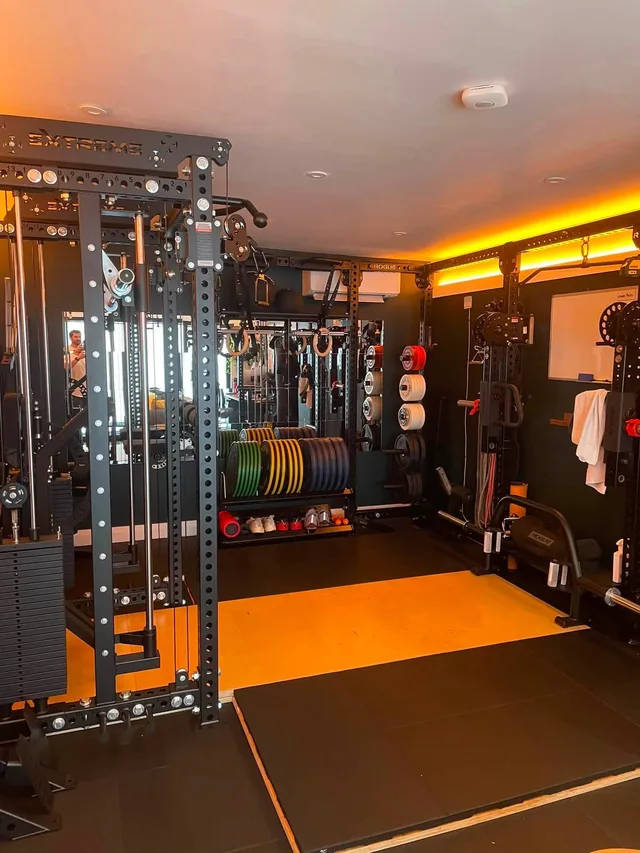
Put storage on the plan
Plates, bars, dumbbells, handles, bands, mats… it adds up. Then there are the attachments waiting for their turn on the rack. List what you own or plan to buy, and measure the awkward pieces before choosing shelves or hooks.
Keep the things you use regularly close to where you use them. A plate tree may look tidy in the far corner, but carrying every plate across the room gets old quickly. Walk through the route and leave enough space to take things out, not just put them away.
Rack storage can get in the way
Plate pegs make use of the rack, but remember the diameter of the loaded plates. They can overlap the bench, lifting area or cable trolley. Mark the whole plate on your plan rather than just the peg, and keep the holes you need for J-cups and safeties accessible.
Use storage designed for the rack and follow its load and anchoring instructions. Adding weight to the frame isn’t a substitute for fixings the manufacturer requires.
Make putting things away easy
A few well-placed hooks or trays might do more for the room than a large cabinet. Choose supports and fixings rated for the surface and load. A heavy attachment needs somewhere secure; an improvised hook that happens to fit won’t do.
After a session, notice what’s still on the floor. Is its storage too far away, too awkward to reach or already full? Sort that small annoyance before buying another storage unit. Leave exits and walkways clear, and keep enough room to train.
- Keep exits and walkways clear.
- Check load ratings and wall or rack fixings.
- Allow room for the full item, including plates.
- Plan somewhere for attachments while they’re off the rack.
Something missing? Send a suggestion or correction.