Fundamentals · Chapter 6 of 12
Choosing a barbell for your home gym
Pick a bar for the lifts you enjoy, then make sure it works with your rack, plates and room. Shorter isn’t always more convenient.
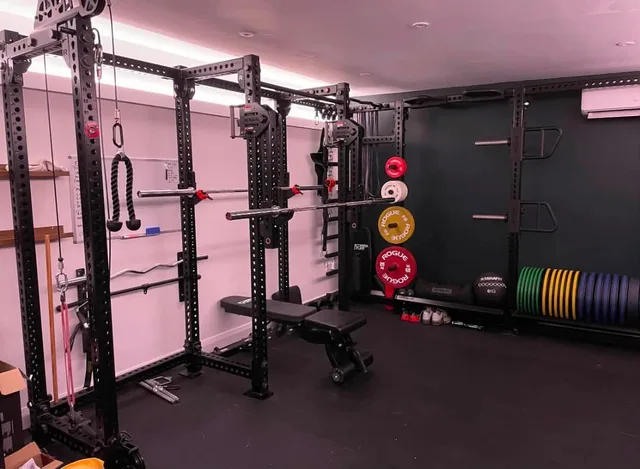
What will you use it for?
Start with your usual sessions. Power bars, weightlifting bars and multipurpose bars put different emphasis on grip, shaft diameter and sleeve rotation. The manufacturer’s intended use is a better starting point than the most impressive number in the advert.
If there’s a bar you enjoy using at your local gym, find out which one it is and what you like about it. The knurling, centre knurl and shaft diameter are worth comparing. You can get into specialist bars later; your first one needs to suit the training you actually do.
Three measurements worth knowing
Overall length tells you how much room the bar takes up. The distance between the inner sleeve shoulders tells you whether it can sit properly on your rack’s J-cups. Loadable sleeve length tells you how much space you have for plates and collars.
A short bar can save room and still be too short to use in your rack. Match the sleeve diameter to your plates and collars as well. Olympic plates commonly have an opening around 50mm, but other systems exist. Use the actual specifications rather than relying on the word “Olympic”.
- Overall length and access to both ends.
- Usable shaft length against your rack width.
- Sleeve diameter and loadable sleeve length.
Remember where it’s going to live
A damp garage is a different home for a bar from a dry indoor room. Read the finish and maintenance guidance, and plan somewhere to store it without leaving it across a walkway.
For a used bar, ask about its history and inspect straightness, sleeve operation and visible damage. Follow the manufacturer’s loading and handling instructions. A big strength figure in the description doesn’t mean every load or use is suitable.
Sources & further reading
Source pages checked 24 October 2026.
Something missing? Send a suggestion or correction.